Balancing Both Mandates: Fed January 2026 Decision
On December 9-10, the Federal Reserve (the “Fed”) implemented a 25 basis point rate cut for the third time in a row, lowering the target range to 3.50%–3.75%. [1]

Markets currently anticipate that the Fed will pause rate cuts at the upcoming January meeting, as economic data continues to emerge.[2] This article examines the key points and explores what it means for your portfolio.
The December Meeting
The decision to cut rates by a quarter percentage point was not unanimous. Stephen Miran, staying true to his previous dovish position, advocated for a 50 basis point cut, while two other members, Goolsbee and Schmid, voted to keep rates unchanged.[3]
The Fed is facing conflicting pressures. On one hand, the unemployment rate increased from 4% in January to 4.4% by year’s end. On the other hand, inflation progress has stalled, with the Fed’s preferred inflation measure (Core PCE) remaining at 2.8%, above the target.
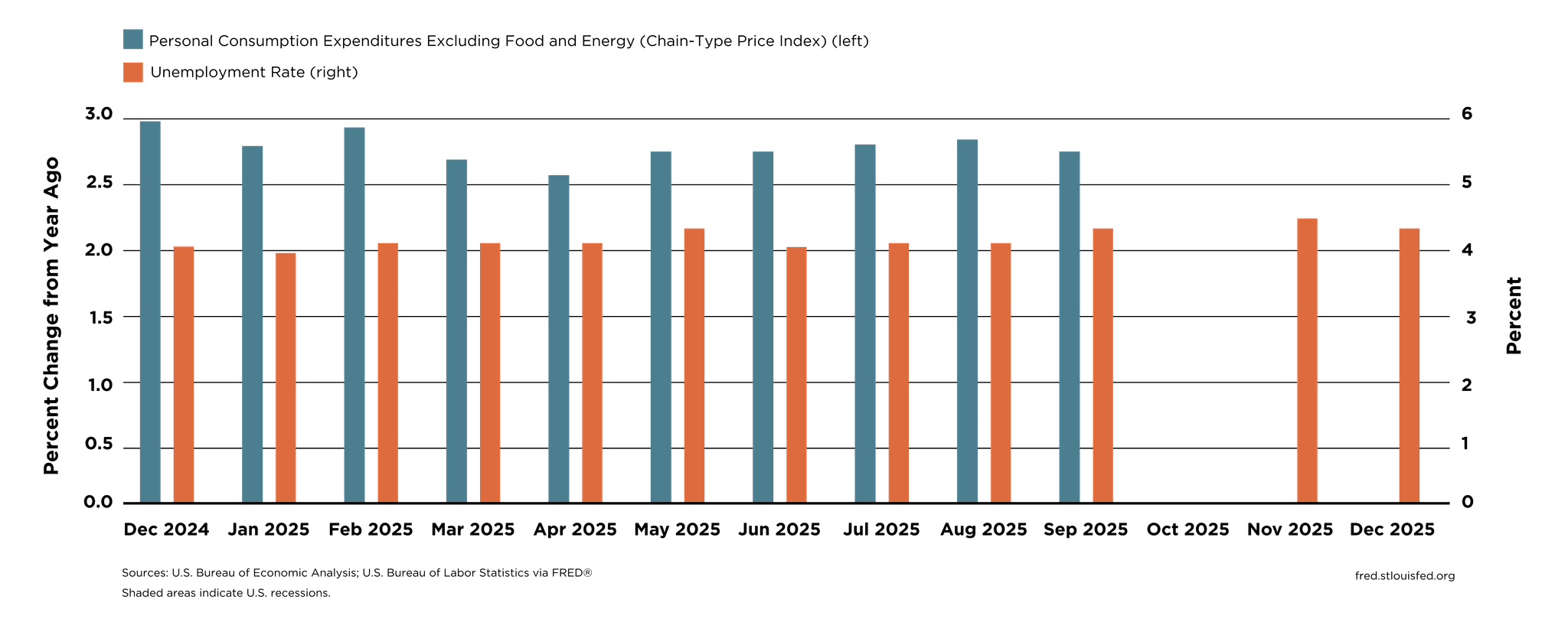
This situation presents arguments for both sides, with no clear solution to resolve the tension.
Fed’s Economic Projections
The Fed’s December projections indicate an interest rate target of 3.1% by 2028, implying two additional rate cuts, one per year. The Fed also expects inflation to fall to 2% by the same deadline.[4] However, these projections are based on optimistic assumptions of continued growth and falling unemployment.
Navigating Through Uncertainty
The lack of crucial inflation and employment data has made the situation more difficult to navigate. Due to the government shutdown, the most recent PCE inflation data available is from September, as of the time of writing.[5] The latest CPI figures show a cooling of headline inflation from 3% in September to 2.7% in December.[6] However, some economists have criticized these figures due to gaps in data during the shutdown.[7]
The latest JOLTS report, while not signaling a recession, suggests a “frozen” job market, with both job openings and layoffs decreasing (low-fire, low-hire).[8] The Non-Farm Payrolls data further supports the image of a stable but stagnant job market.[9]
On a positive note, 2025’s average monthly job growth of ~49k (about a third of last year’s pace) is considered within an acceptable "breakeven" range, according to the latest official analysis.[10] GDP growth also exceeded expectations in Q3, reaching 4.3%, signaling that demand is not weakening.[11]
The New Fed Chairman
Adding to the uncertainty is the ongoing question of who will succeed the embattled Fed Chairman, Jerome Powell. As of January 9th, Powell is under investigation by the DOJ over statements regarding renovations to the central bank's offices.[12] It remains to be seen whether this investigation will evolve into a criminal probe.
While President Trump has publicly denied using state machinery to pressure the Fed to lower rates, as Powell has claimed, he has voiced strong support for rate cuts. Trump is also believed to favor his staffer, Kevin Hassett, to replace Powell when his term ends.[13] A leadership change could fundamentally shift the Fed's approach, potentially moving from its current “data-dependent” strategy to a focus on a target “neutral rate” of 3%.
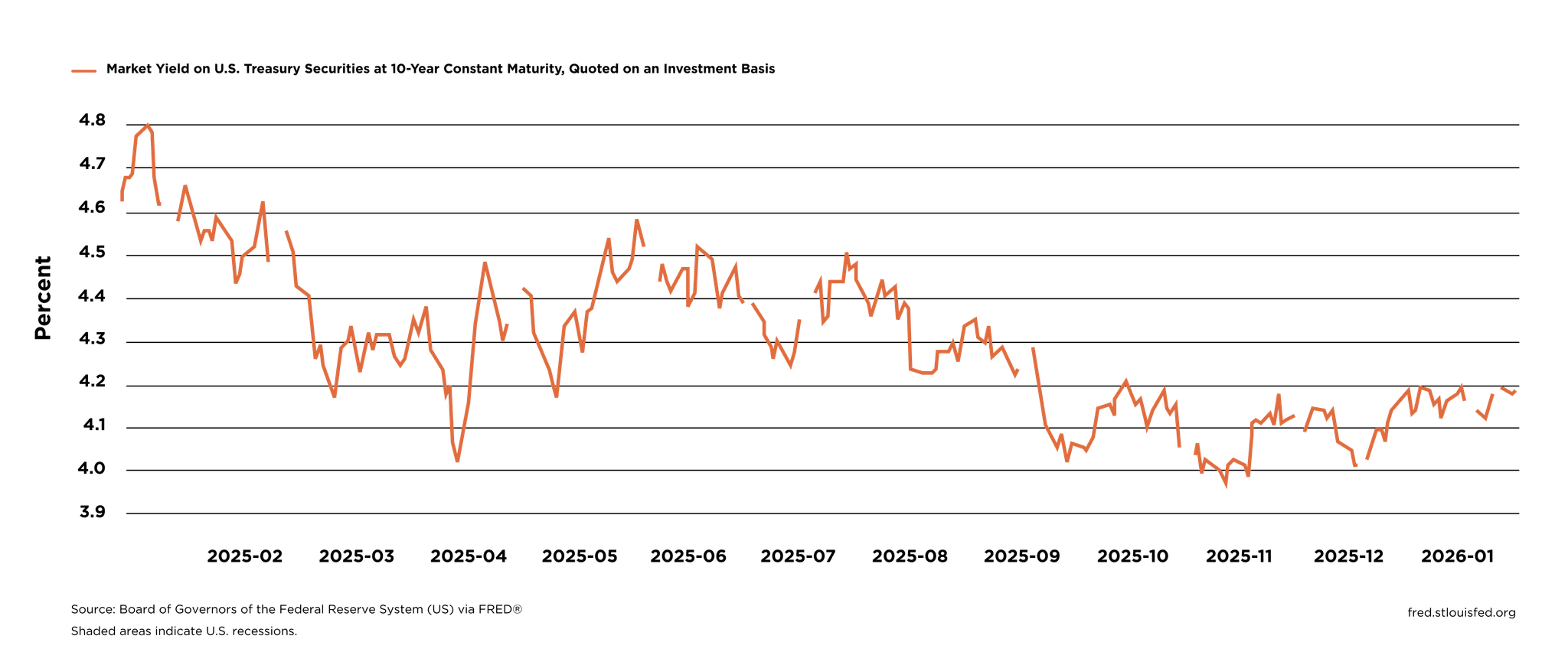
However, the scale of U.S. government debt means the bond market will also influence this decision. A perceived loyalist could cause negative reactions from the bond market, as Treasury yields spiked in December following rumors about Hassett’s potential appointment.[14] The decision, which is expected to be announced this month, carries significant consequences and could disrupt several forecasts.
 Conclusion
As highlighted above, trying to predict future Fed actions based on the current combination of missing, inconclusive, and contested data, along with the potential for a shift in the Fed’s strategy, is highly speculative.
The focus should not be on making precise predictions but on building a portfolio that is resilient in the face of uncertainty. As emphasized in previous writings, diversification remains the cornerstone of successful investing.
[5] Bureau of Economic Analysis
[6] Bureau of Labor Statistics
[8] Bureau of Labor Statistics
[9] Bureau of Labor Statistics